📝 Week 8
July 28, 2026
Using pi to understand AEIC nvPM and connect it to my model
AEIC + MEEM interpretation
This week I used pi as a research assistant to help me interpret how AEIC calculates non-volatile particulate matter (nvPM). AEIC takes an aircraft trajectory, estimates aircraft performance and atmospheric conditions, passes those values into the MEEM nvPM model, and then converts emission indices into segment-level and gridded emissions.
The goal was not just to understand AEIC as a standalone model, but to figure out how it could connect to my low-aromatic jet fuel work. Since my project changes fuel properties and estimates potential soot and contrail impacts, I need to understand where nvPM emission indices enter the aviation-emissions workflow and how changes in fuel composition could be translated into updated emissions estimates.
I created a visual website explaining the AEIC → MEEM calculation chain. The page is designed so individual sections can be screenshotted and copied into PowerPoint slides for group meetings or future presentations.
Visual workflow: crude price assessment
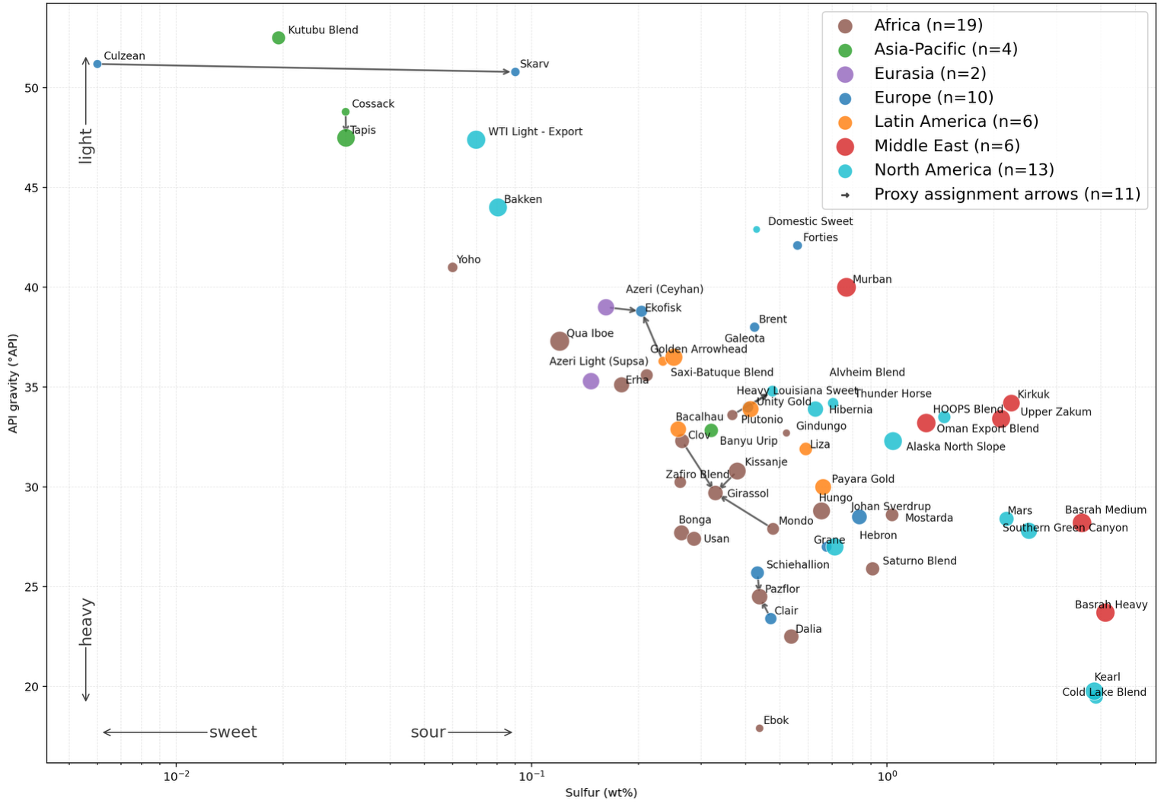
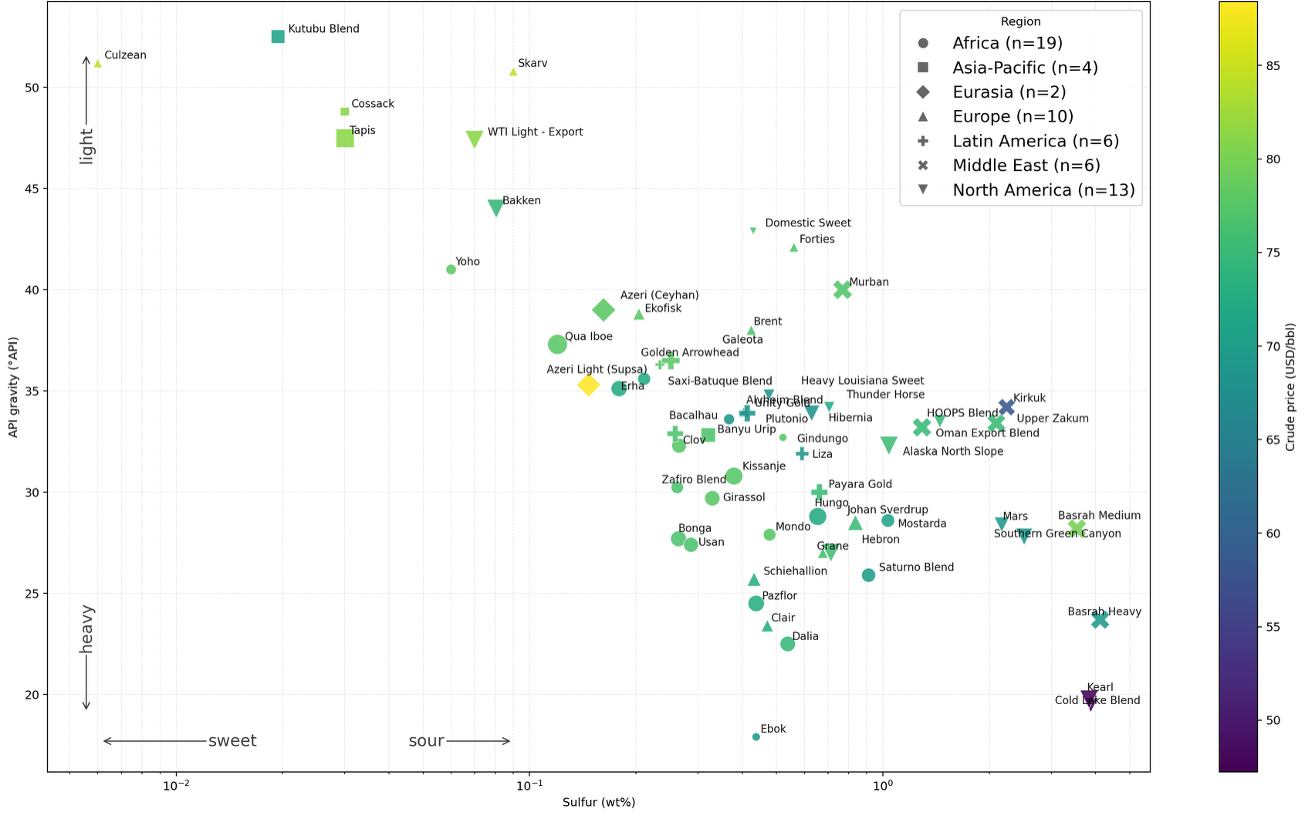
I also worked on strengthening the crude-price basis for the refinery economics model. The workflow had two parts: first, using deep research AI to find more direct price sources; second, using pi to build a transparent proxy method for the crudes that still had no available price data.
Find more price sources
Used deep research AI to search online for additional crude price references and reduce missing price coverage.
Identify remaining gaps
After the search, only 11 of the 60 crudes were still missing direct price data.
Match proxy crudes
Used pi to build a method that selects the closest available proxy crude based on physical properties and location.
Create complete price set
Combined direct prices and proxy prices so every crude in the model has an assigned price basis.
Proxy matching rule
For crudes with no available price data, proxy crude price was selected using:
- API gravity within ±3
- Sulfur within ±0.2 wt%
- Geographic proximity
- Then weighted closest match