
Research
Cost benefit analysis of low aromatic jet fuel
Problem
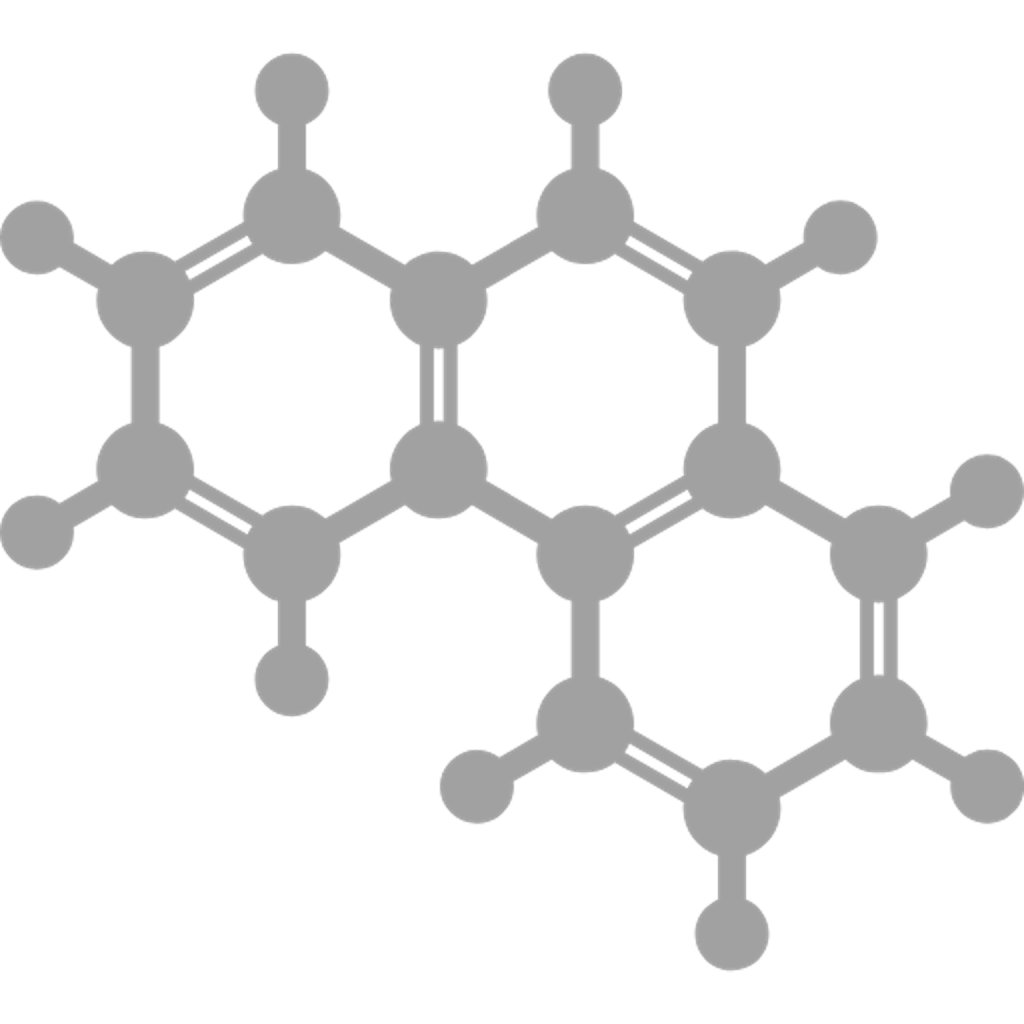
Aromatics have higher binding energy between atoms compared to aliphatic compounds. Jet fuel with higher aromatics content has higher soot emissions.
Soot emissions have a variety of impacts:
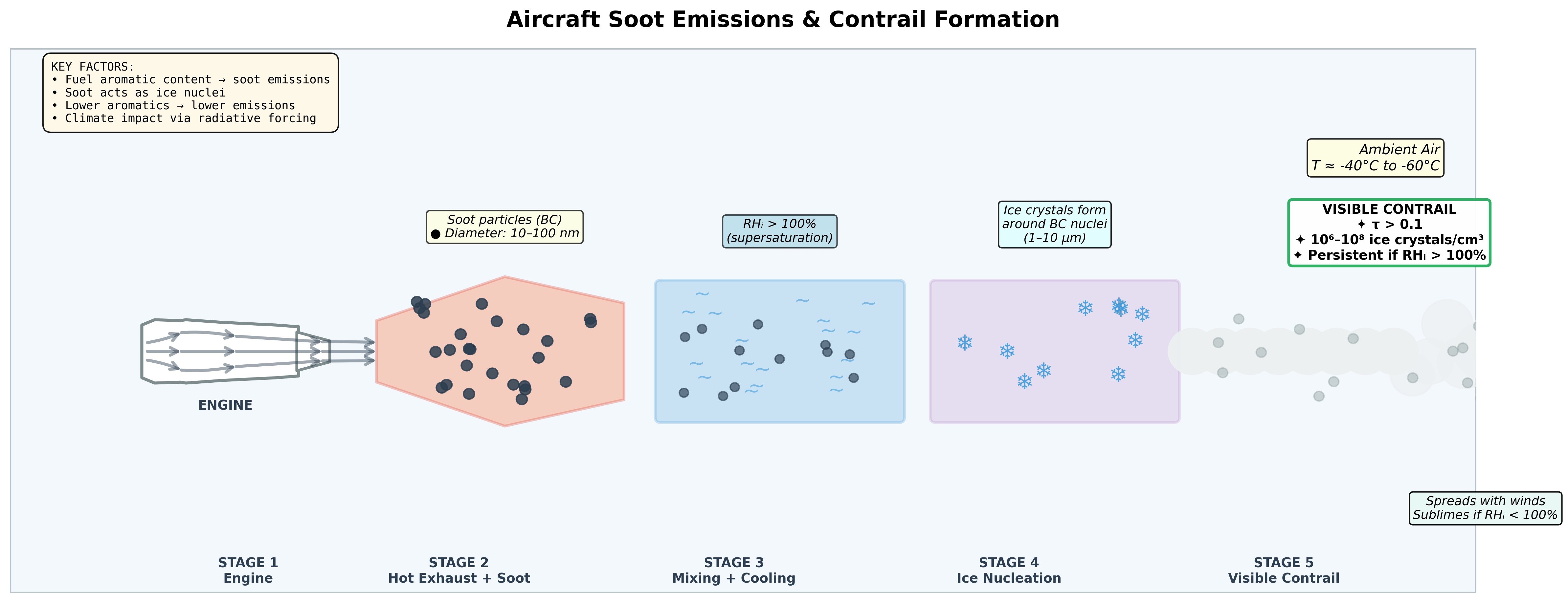
Opportunity
- Consider 2 forms of refining: hydrotreatment and extractive distillation
- Assess model with 3 different crude oils with various sulfur/aromatics content
- Evaluate climate and air quality benefits/disbenefits from production and utilization of low-aromatic fuel
- Conduct sensitivity analysis
Research updates
Highlights, artifacts, and decisions from the project as it evolves.
Project details
Background, objectives, pathways (hydrotreatment + solvent extraction), and methods for the cost–benefit analysis.
Open project detailsInteractive nvPM analysis
Interactive plots, model diagnostics, fitted-function comparisons, and bootstrap confidence bands for relative nvPM EIn and mBC.
Open nvPM analysisLow aromatic fuel visual explainer
A website-based visual explainer created using the visual annotator tool.
Open visual explainerAEIC nvPM calculation visual explainer
A slide-friendly website explaining how AEIC uses aircraft trajectories, performance and atmospheric models, and the MEEM nvPM model to produce gridded nvPM mass and number emissions.
Global Refineries and Crudes
Interactive maps of global refinery locations, BP crude assays, and inferred refinery–crude matches.
Weekly journal
Week-by-week notes on building the website + research workflow.
📝 Week 1
Website improvements + early research workflow experiments using pi skills.
📝 Week 2
Literature review strategy pivot for nvPM emissions campaigns + thrust-normalized dataset requirements.
📝 Week 3
On vacation.
📝 Week 4
Updated the Improve Codebase Architecture skill to include a plain-English architecture review, then applied Suggestion A to refinery_process_model.
📝 Week 5
Expanded the refinery process cost model to cover more crudes and real refinery locations, including crude–refinery matching, location-based cost factors, and an interactive Global Refineries and Crudes map.
📝 Week 6
Used the teach skill first on my low-aromatic jet fuel research topic, then to build an LLM learning workspace that taught me next-token prediction, training vs. inference, tokens, embeddings, and attention.
📝 Week 7
Used Backlog and pi to rebuild my low-aromatic fuel research repo through a draft → refine → task → execute → document workflow, with a visual summary of completed tasks.
📝 Week 8
Used pi to interpret AEIC's nvPM calculation chain, built a visual explainer, and finalized crude price coverage using deep research plus proxy matching for remaining crudes.



About
Background
I'm Tara Housen, a Doctoral candidate in Aeronautics and Astronautics at MIT working in the Lab for Aviation and the Environment.
I'm originally from New Jersey. I earned my B.S. in Mechanical Engineering at Villanova University in 2022. During undergrad I interned at Safran Aerosystems which got me interested in Aerospace. Post-graduation I pursued my Masters in Aerospace Engineering at MIT where I conducted research on direct air capture for atmospheric CO2 removal. Presently, I am pursuing my Phd in Aerospace and conducting research on sustainable drop-in fuels for aviation. My current project is focused low aromatic jet fuel to reduce contrail impacts.
Outside of research, I enjoy baking, traveling, and working out.
Contact
Email: thousen@mit.edu
Phone: 732-456-2041
Location: 412 Laurel Ave, Brielle, NJ 08730